

There are two responses to why the World Cup gave the Great Lakes the shaft.
First, it didn’t.
And second, it didn’t.
Let’s start with the first one.
The World Cup—as in the 2026 version—boasts 16 host cities scattered across a trio of countries.
Three are in Mexico, eleven in the US, and two in Canada.
Located at 43°39’09″N 79°22’54″W, along the northwestern shore of Lake Ontario, is a place called Toronto.
Six games will be played there.
So like I said above, it didn’t.
And now for the second one, the American one, if you will.
To arrive at a conclusion, we have no choice but to access a list of US metro areas by population.
Ten of the 11 US host metros—New York, Los Angeles, Dallas, Houston, Atlanta, Miami, Philadelphia, Boston, San Francisco, and Seattle—are among the top 15 American metros by population. (The outlier, at number 31, is Kansas City.)
The five metros in the top 15 that didn’t make the cut include Chicago (at number three) and Detroit (at number 14).
Anti-Great Lakes bias?
The answer, among other places, can be found in Chapter 14 of Soccernomics—the 2026 World Cup Edition, of course.
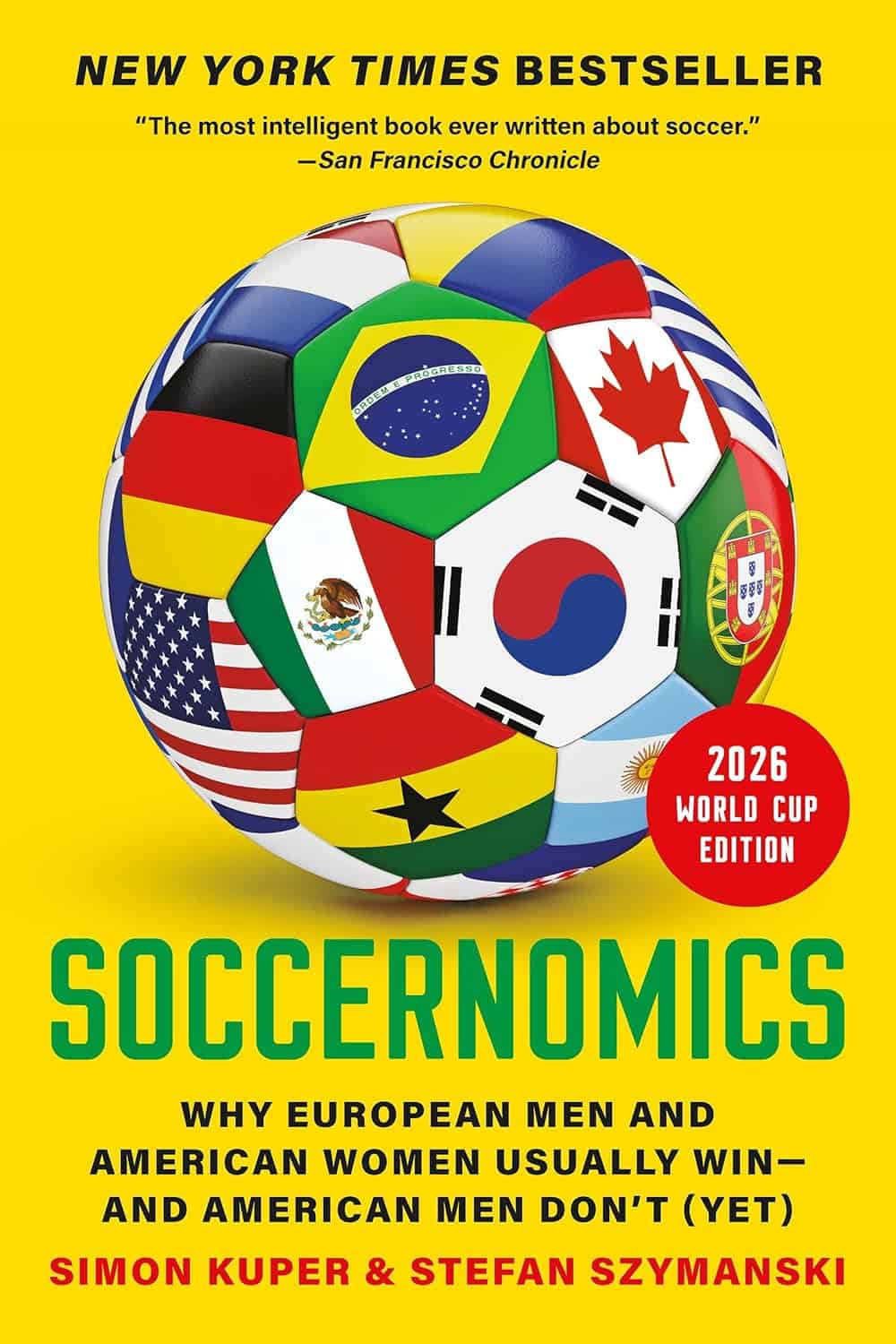
There, authors Simon Kuper and Stefan Szymanski expose the myth that hosting a mega-event is a sound financial investment. In most cases, the expenditure involved in preparing for the party far exceeds any economic return.
In the case of the World Cup, things are even worse, what with FIFA’s lack of transparency and its unreasonable demands, whether they pertain to playing surface, seating capacity, public transit, or whatever.
Sure, there might be a “feel-good” factor, though we can call it what it is—a line of cocaine.
American cities, particularly those that have been around the block, are quite aware of this reality. Short-term gains, which might not even exist, can translate into long-term losses.
Great Lakes cities, the likes of Chicago and Detroit, have seen a thing or two. In other words, they ain’t drinking the Kool-Aid.
That’s why in 2017, Detroit opted out of consideration to be a 2026 World Cup host.
In 2018, Chicago did the same.
As such, the real question—if anyone is still asking—is why the Great Lakes gave the World Cup the shaft.
And the answer key, as you know, lies with FIFA.


2 Responses
Good decision Great Lakes!!
I agree!