

The other day, Daniel Wallace, who knows nothing of my existence, helped me find my dream city.
That day, you could say, was full of angst, punctuated by a look into the future and the realization that my ability to avoid running with the crowd was time-limited.
As a result of this epiphany, I understood that eventually, like everyone else, I would be expected to move down South.
I would be expected, in other words, to embrace heat and humidity, right-wing politics, and Jesus.
None would I consider a forte or passion, but none was the cause of my real concern, the one that began to keep me up at night.
That worry, of course, was population gain.
Cities, in my Rust-Belt eyes, are meant to shrink. Factories are meant to be empty. There should be whispers of steel, crime in the urban core, and de facto segregation.
I clicked through Southern cities on Wikipedia and noted some disturbing population trends:
- Atlanta: up over 100,000 since 1990
- Miami: about the same as Atlanta
- Tampa: about the same as Miami
- Nashville: up over 200,000 since 1990
- Charlotte: up by a factor of two in the same time span
Troubled, I ran to my bookshelf and found a trusted resource, one that celebrates—but doesn’t sugar coat—the South.
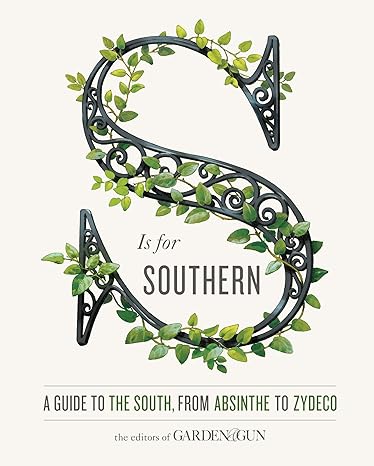
I flipped the pages, secretly hoping that somewhere among the entries on bananas foster, Frito pie, and hush puppies, I might finally find my dream city.
Early on, the literary exercise held little promise, landing me on places like the aforementioned Atlanta, Austin (TX), and Charleston (SC). The brands were good, and the tax bases were increasing, meaning my dreams would be shattered.
Then, by chance, I flipped backward, realizing that in my haste to read about biscuits, I had skipped over an entry.
Immediately, I felt a connection.
In describing my dream city, Daniel Wallace used the following words:
There were more steel mills and furnaces than barbecue joints and churches, so much so that for quite some time, (it) was known as the “Pittsburgh of the South.” I don’t know who came up with this nickname and why they thought it was a good thing to want to be the diminutive Pittsburgh, when I have it on good authority that even Pittsburgh didn’t want to be Pittsburgh…
I went back to Wikipedia.
In 1960, the city had 340,887 residents, a number that had dropped to 200,733 by 2020. Even better, the 2024 estimate was down to 196,357.
Then, to be absolutely sure, I asked a question to AI.
Yes, it has a significant history of shuttered steel mills.
Crime, I already knew, was an issue, and segregation—c’mon now, it is the South.
I looked up and thanked the Good Lord, knowing He had designed this place especially for me.
One day, as the pangs of arthritis intensify and the desire to discuss low taxes becomes an obsession, I, too, will move down South.
And at that moment, in the spirit of Jesus, the population of Birmingham, Alabama, will rise once again.


2 Responses
Wow! Have to put this on my bucket list!
It definitely has a fascinating and at times very dark history, yet the promise is there.