

The other day, as I did the urban roam, I learned the obvious.
First, I learned that I live near corn and deer, meaning that to even do the urban roam—an activity meant for pedestrians—I first need to drive.
Then, as I glanced at my fitness app and saw a mere 117 steps, I realized I should do this type of thing more often.
But most importantly, I remembered that without a good urban roam, your city’s brand is screwed.
Let’s take a look at a few examples, starting with the obvious and moving on to my favorite—the obscure.
Brand in this case is judged by the standard reaction when you mention a city’s name—Wow! means good and Why?! means bad.
New York City (Good)
If you ever have a chance, explore New York City by car. You’ll notice that large swaths of the place consist of asphalt, concrete, too many people, and nothing especially inspiring. But in parts—particularly Manhattan—the urban roam is arguably the best in the world.
Chicago (Good)
By some measures, Chicago is dangerous, segregated, and flat as hell. At certain times of the year, it is uncomfortably cold. But again, thanks to a fantastic (downtown) urban roam—right on a Great Lake—people are enamored.
Detroit (Bad)
Detroit is still one of the 15 largest metro areas in the country, home to posh suburbs, four major professional sports teams, an international border, and easy access to the Great Lakes. But at its best, the urban roam is patchy.
St. Louis (Bad)
A top 25 metro area by population, St. Louis—like Detroit—boasts major sports, high-end suburbs, excellent universities, and all sorts of Fortune 500 companies. Still, most would agree you should know where you’re going before you start roaming.
Charleston, SC (Good)
Charleston is not particularly big. Some of the metro area is frankly dangerous, and one of the highlights is a market where the enslaved once sold their goods. That said, the urban roam makes you feel alive.
Rochester, NY (Bad)
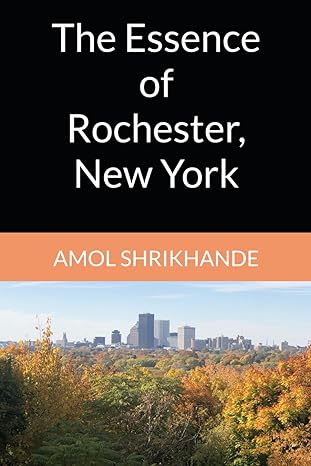
Rochester is bigger than Charleston, and while lacking an ocean, it does have a sizable lake (Lake Ontario). Multiple charming suburbs line the Erie Canal, and the area teems with college students. But as I reminded myself the other day, Main Street—the one downtown—sports empty storefronts, a Social Security office, and a weird pink “hotel” with broken windows.
So what is the point?
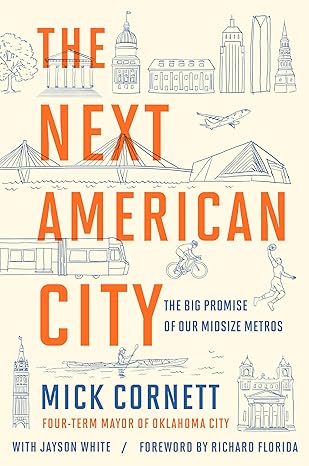
As Mick Cornett, the former mayor of Oklahoma City, said in his book The Next American City: The Big Promise of Our Midsize Metros, you can’t be a suburb of nothing.
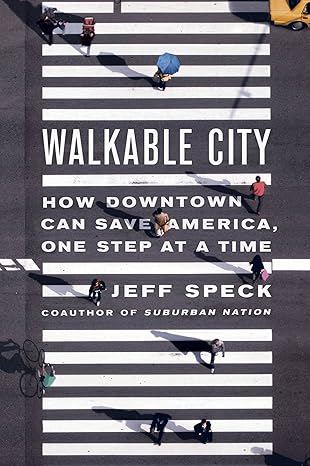
As Jeff Speck, author of Walkable City: How Downtown Can Save America, One Step at a Time, said in his prescription for reviving cities, pick your winners—i.e. start with downtown.
And to the otherwise lovely Rochester (NY), no one will ever take you seriously until you fix the middle.
P.S.
A special shout out to Downtown ROCs, a nonprofit organization that is resuscitating the heart of Rochester, one beautiful garden at a time.


2 Responses
Thanks for the shoutout to Downtown ROCs! We are indeed working hard to make downtown “roamable” (i.e. an interesting walk from one end to the other). Downtown matters and mid-sized cities have a unique opportunity to make the center city the true lifeblood of the region. It’s a choice; one we need to make.
Absolutely! The work of Downtown ROCs is inspiring—citizens working hard to improve the center of the city. And I couldn’t agree more—midsized cities like Rochester, by making the right choice(s), can completely flip the script.